

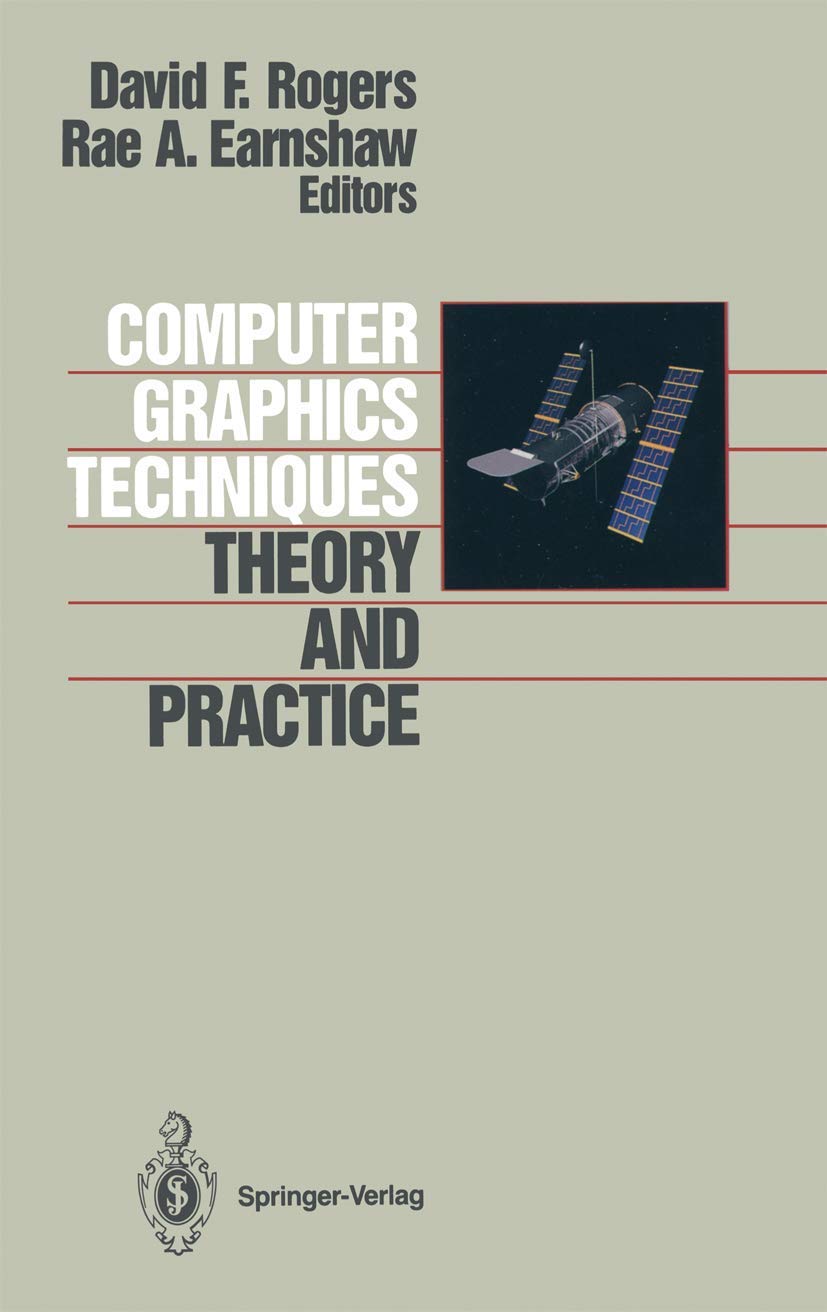
Computer Graphics Techniques: Theory and Practice
MIA KARTS BOOKS

Computer Graphics Techniques: Theory and Practice
Book Details
- Author
- David F. Rogers
- Publisher
- Springer
- Format
- Hardcover
- Language
- English
- Category
- Drafting & Presentation
- Condition
- New
- ISBN-13
- 9780387972374
- ISBN-10
- 0387972374
Free U.S. shipping on all orders. International shipping is calculated at checkout.
ISBN: 0387972374
Author: Rogers, David F.
Condition: New
In the third paper in this chapter, Mike Pratt provides an historical intro duction to solid modeling. He presents the development of the three most freqently used techniques: cellular subdivision, constructive solid modeling and boundary representation. Although each of these techniques devel oped more or less independently, today the designer's needs dictate that a successful system allows access to all of these methods. For example, sculptured surfaces are generally represented using a boundary represen tation. However, the design of a complex vehicle generally dictates that a sculptured surface representation is most efficient for the 'skin' while constructive solid geometry representation is most efficent for the inter nal mechanism. Pratt also discusses the emerging concept of design by 'feature line'. Finally, he addresses the very important problem of data exchange between solid modeling systems and the progress that is being made towards developing an international standard. With the advent of reasonably low cost scientific workstations with rea sonable to outstanding graphics capabilities, scientists and engineers are increasingly turning to computer analysis for answers to fundamental ques tions and to computer graphics for present~tion of those answers. Although the current crop of workstations exhibit quite impressive computational ca pability, they are still not capable of solving many problems in a reasonable time frame, e. g. , executing computational fluid dynamics and finite element codes or generating complex ray traced or radiosity based images. In the sixth chapter Mike Muuss of the U. S.
Have a question?
Computer Graphics Techniques: Theory and Practice
You May Also Like
More in Architecture