


Effects of Land-Use Change on Atmospheric CO2 Concentrations: South and Southeast Asia ...
MIA KARTS BOOKS

- Vendor: Mia Karts
Effects of Land-Use Change on Atmospheric CO2 Concentrations: South and Southeast Asia as a Case Study (Ecological Studies, 101)
Book Details
- Author
- Virginia H. Dale
- Publisher
- Springer
- Format
- Hardcover
- Language
- English
- Category
- Pollution
- Condition
- New
- ISBN-13
- 9780387941172
- ISBN-10
- 0387941177
Free U.S. shipping on all orders. International shipping is calculated at checkout.
ISBN: 0387941177
Author: Dale, Virginia H.
Condition: New
Roger C. Dahlman Environmental Sciences Division U.S. Department of Energy Washington, D.C. The potential for humans to alter Earth's atmosphere has been recognized since the end of the 19th century when Arrhenius estimated that a doubling of atmospheric carbon dioxide could alter the atmospheric radiation balance and raise average global temperature. Today, atmospheric CO concentrations play an important part in the 2 climate-change debate. Sources and sinks of CO associated with land use can be 2 significant determinants of the rate and magnitude of atmospheric CO change. 2 Combustion of fossil fuels and the deforestation associated with land-use change both contribute CO to the atmosphere; in contrast, biological processes on land create 2 potential sinks for the excess CO . Thus, land-use change and associated biological 2 processes become important elements in assessments of future atmospheric CO 2 increase; land-cover properties also affect the Earth's albedo, which is a climate feedback.
Have a question?
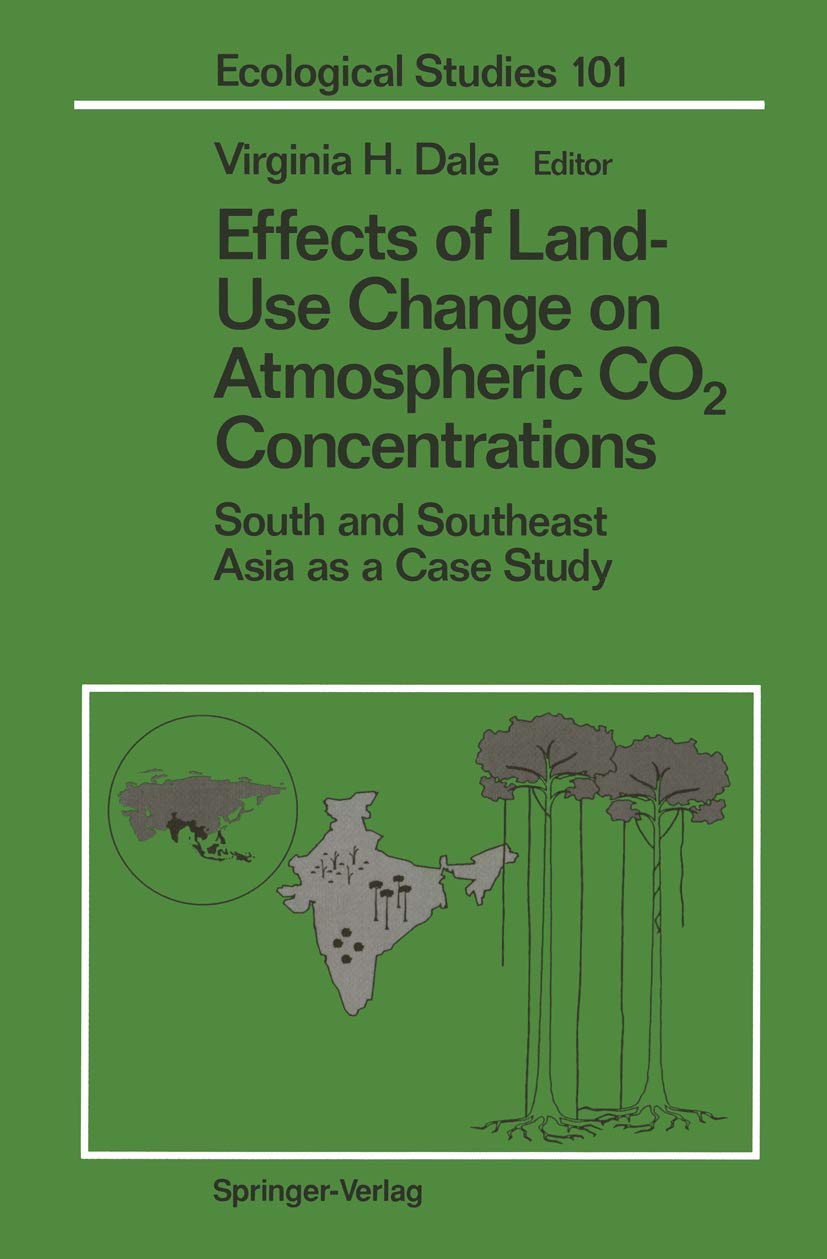
Effects of Land-Use Change on Atmospheric CO2 Concentrations: South and Southeast Asia as a Case Study (Ecological Studies, 101)
You May Also Like
More in Asian History






![Asian Tofu: Discover the Best, Make Your Own, and Cook It at Home [A Cookbook]](http://miakarts.com/cdn/shop/files/71hnzT109ML.jpg?v=1789190788&width=400)


