

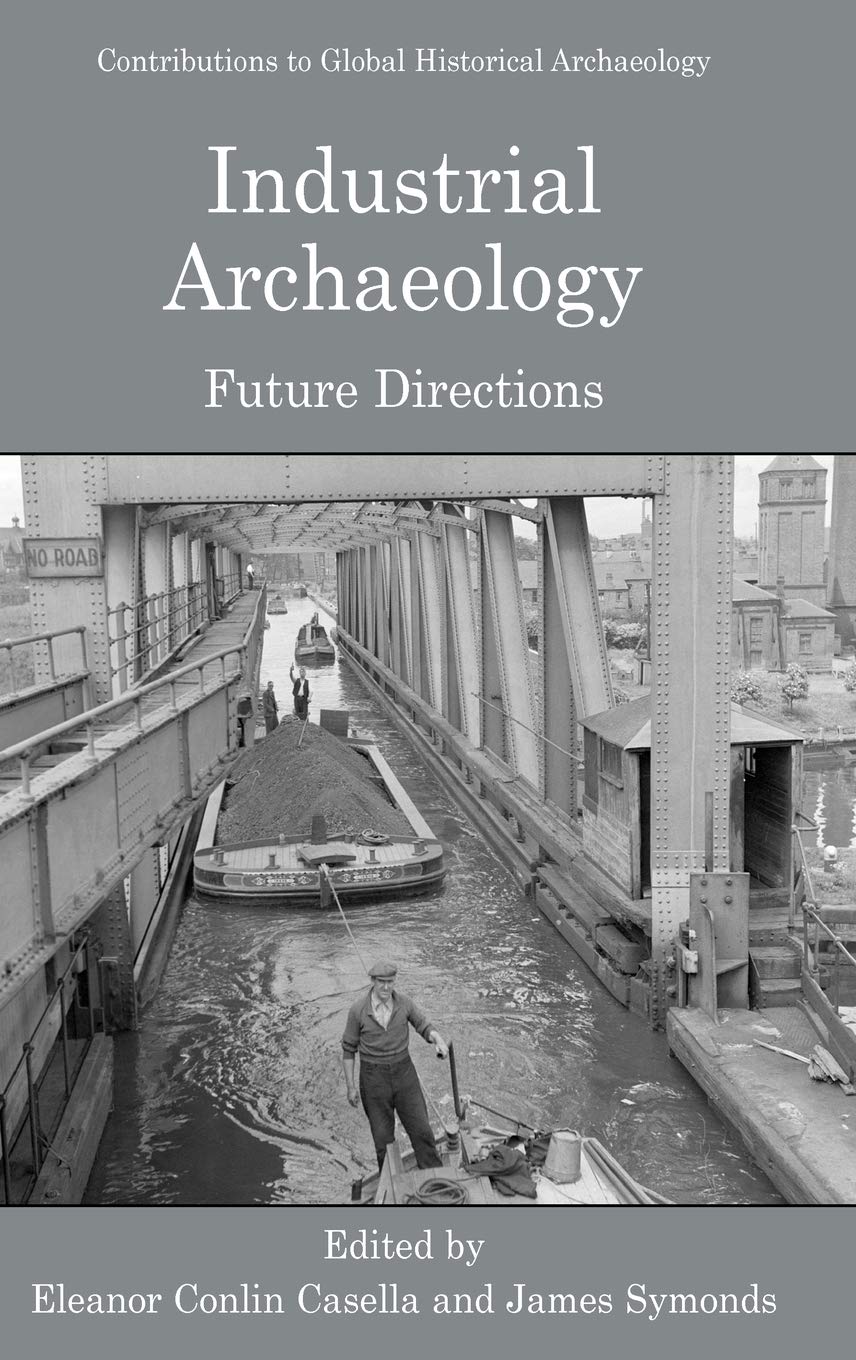
Industrial Archaeology: Future Directions (Contributions To Global Historical Archaeology)
MIA KARTS BOOKS

- Vendor: Mia Karts
Industrial Archaeology: Future Directions (Contributions To Global Historical Archaeology)
Book Details
- Author
- Eleanor Casella
- Publisher
- Springer
- Format
- Hardcover
- Language
- English
- Category
- Engineering
- Condition
- New
- ISBN-13
- 9780387226088
- ISBN-10
- 0387226087
Free U.S. shipping on all orders. International shipping is calculated at checkout.
ISBN: 0387226087
Author: Casella, Eleanor
Condition: New
Product Description Eleanor Conlin Casella and James Symonds th The essays in this book are adapted from papers presented at the 24 Annual Conference of the Theoretical Archaeology Group, held at the University of Manchester, in December 2002. The conference session An Industrial Revolution? Future Directions for Industrial Arch- ology, was jointly devised by the editors, and sponsored by English Heritage, with the intention of gathering together leading industrial and historical archaeologists from around the world. Speakers were asked to consider aspects of contemporary theory and practice, as well as possible future directions for the study of industrialisation and - dustrial societies. It perhaps ?tting that this meeting was convened in Manchester, which has a rich industrial heritage, and has recently been proclaimed as the archetype city of the industrial revolution (McNeil and George, 2002). However, just as Manchester is being transformed by reg- eration, shaking off many of the negative connotations associated st with factory-based industrial production, and remaking itself as a 21 century city, then so too, is the archaeological study of industrialisation being transformed. In the most recent overview of industrial archaeology in the UK, Sir Neil Cossons cautioned that industrial archaeology risked becoming a one generation subject, that stood on the edge of oblivion, alongside th the mid-20 century pursuit of folklife studies (Cossons 2000:13). It is to be hoped that the papers in this volume demonstrate that this will not be the case. Review David Cranstone revists earlier debates in the field concerning whether industrial archaeology is best considered a thematic or period discipline and comes down firmly in support of the latter, arguing, in fact, that industrial archaeology should not exist at all. This provocative essay, a standout of the volume, situates industrial archaeology within a broad range of academic contexts, and throws some needed criticism on the tendency for archaeological studies...to jump to the broadest topics (capitalism, colonialism, etc) using highly selective case studies to make assertions that lack analytical rigor....Mary Beaudry's closing commentary, however, ends the volume on a clear note. Beaudry remains wary of calls to unify research into the past under one banner, nothing that the project at hand allows considerable room for different narratives pitched at different analytical scales. She argues further, in agreement with a contributor in this volume, that a key to sustaining the viability of archaeology lies in continuing advocacy not only for the preservation of monuments and landscapes but also of people's lifeways.Paul WhiteIA: Journal of the Society for Industrial Archaeologyvol. 36, no.1 From the Back Cover The essays in this book are adapted from papers presented at the 24th Annual Conference of the Theoretical Archaeology Group, held at the University of Manchester, in December 2002. The conference session "An Industrial Revolution? Future Directions for Industrial Archaeology," was jointly devised by the editors, and sponsored by English Heritage, with the intention of gathering together leading industrial and historical archaeologists from around the world. However, just as Manchester is being transformed by regeneration, shaking off many of the negative connotations associated with factory-based industrial production, and remaking itself as a 21st century city, then so too, is the archaeological study of industrialisation being transformed.Over the past decade, industrial archaeology has emerged as a theoretically driven subfield. Research has begun to meaningfully engage with such weighty issues as globalisation; post/modernity; power; innovation and invention; slavery and captivity; class, ethnic, and gender identities; social relations of technology and labour; and the spread and diversification of western capitalism. With contributions
Have a question?
Industrial Archaeology: Future Directions (Contributions To Global Historical Archaeology)
You May Also Like
More in Engineering