


Jokei and Buddhist Devotion in Early Medieval Japan
MIA KARTS BOOKS

Jokei and Buddhist Devotion in Early Medieval Japan
Book Details
- Author
- James L. Ford
- Publisher
- Oxford University Press
- Format
- Hardcover
- Language
- English
- Category
- Buddhism
- Condition
- New
- ISBN-13
- 9780195188141
- ISBN-10
- 0195188144
Free U.S. shipping on all orders. International shipping is calculated at checkout.
ISBN: 0195188144
Author: Ford, James L.
Condition: New
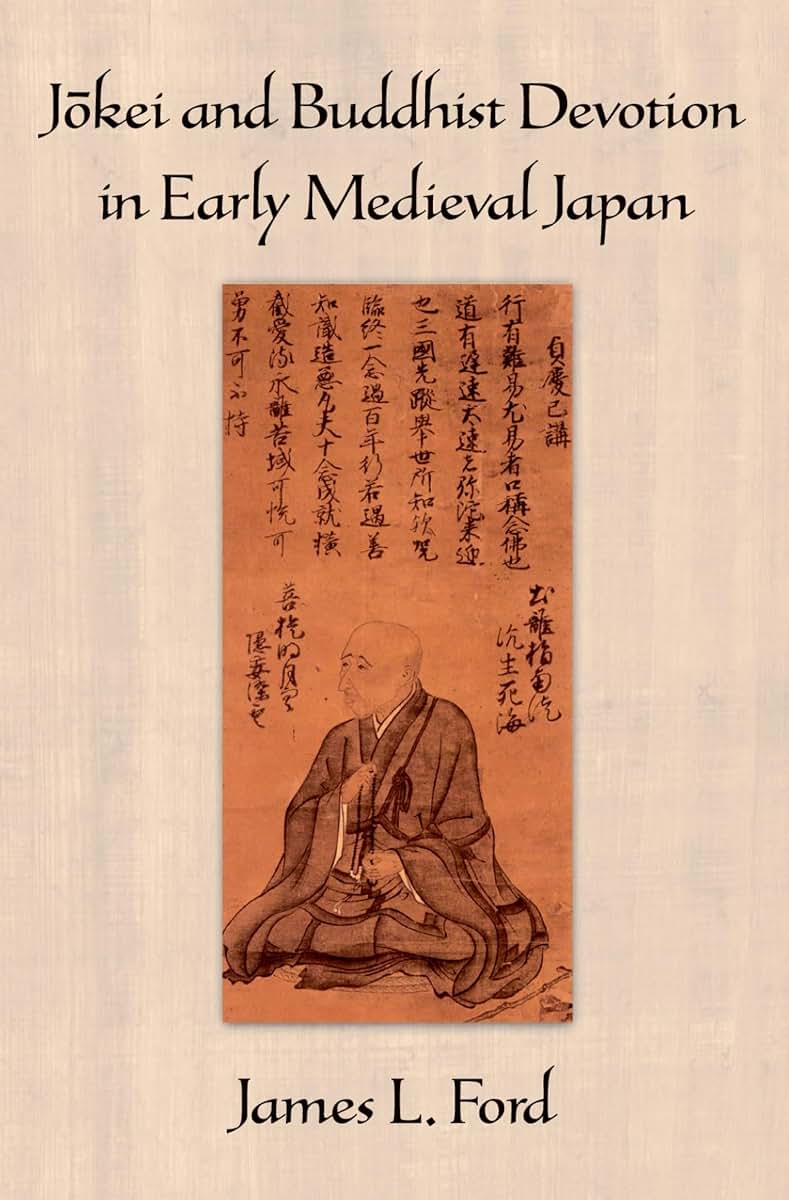
This is the first book-length study in any language of Jo kei (1155-1213), a prominent Buddhist cleric of the Hosso (Yogacara) school, whose life bridged the momentous transition from Heian (794-1185) to Kamakura (1185-1333) Japan. "Kamakura Buddhism" has drawn notable scholarly attention, largely because it marks the emergence of new schools-Pure Land, Nichiren, and Zen-that came to dominate the Buddhist landscape of Japan. Although Jokei is invariably cited as one of the leading representatives of established Buddhism during the Kamakura period, he has been seriously neglected by Western scholars.In this book, James L. Ford aims to shed light on this pivotal and long-overlooked figure. Ford argues convincingly that Jokei is an ideal personage through which to peer anew into the socio-religious dynamics of early medieval Japan. Indeed, Jokei is uniquely linked to a number of decisive trends and issues of dispute including: the conflict between the established schools and Honen's exclusive nenbutsu movement; the precept-revival movement; doctrinal reform efforts; the proliferation of prominent "reclusive monks" (tonseiso); the escalation of fundraising (kanjin) campaigns and popular propagation; and the conspicuous revival of devotion toward Sákyamuni and Maitreya. Jokei represents a paradigm within established Buddhism that recognized the necessity of accessing other powers through esoteric practices, ritual performances, and objects of devotion. While Jokei is best known as a leading critic of Honen's exclusive nenbutsu movement and a conservative defender of normative Buddhist principles, he was also a progressive reformer in his own right. Far from defending the status quo, Jokei envisioned a more accessible, harmonious, and monastically upright form of Buddhism.Through a detailed examination of Jokei's extensive writings and activities, Ford challenges many received interpretations of Jokei's legacy and the transformation of Buddhism in early medieval Japan. This book fills a significant lacuna in Buddhist scholarship
Have a question?
Jokei and Buddhist Devotion in Early Medieval Japan
