

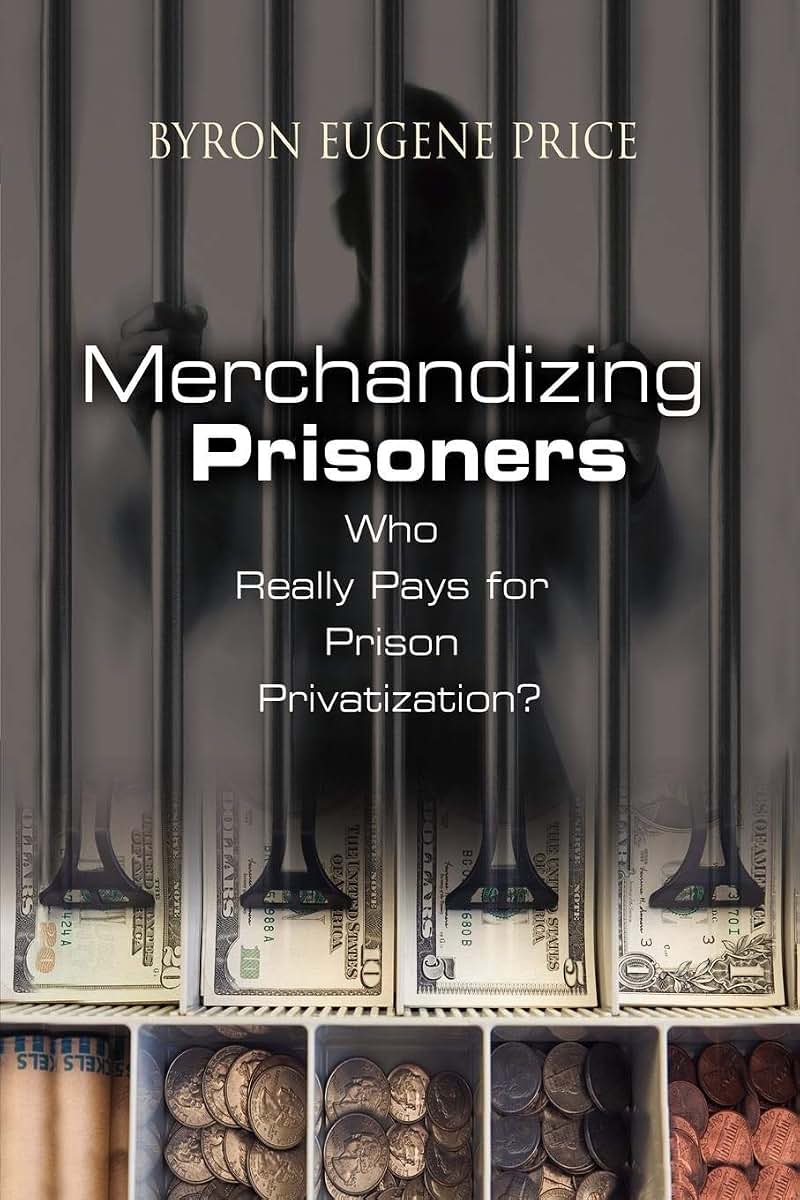
Merchandizing Prisoners: Who Really Pays for Prison Privatization?
MIA KARTS BOOKS

Merchandizing Prisoners: Who Really Pays for Prison Privatization?
Book Details
- Author
- Byron Eugene Price
- Publisher
- Bloomsbury Academic
- Format
- Hardcover
- Language
- English
- Category
- Military
- Condition
- New
- ISBN-13
- 9780275987381
- ISBN-10
- 0275987388
Free U.S. shipping on all orders. International shipping is calculated at checkout.
ISBN: 0275987388
Author: Price, Byron Eugene
Condition: New
Beginning in the mid 1980s, the privatization of jails and prisons burgeoned in the United States. Not only has there been a steady growth of private, for-profit operation of federal, state and county correctional facilities, but private firms have also become more involved in other aspects of the prison industry, such as the financing and construction of new prisons and the renovation of existing ones. Moreover, many of these private companies have gone public and are trading on the stock exchanges. Perhaps more than with other service industries in this country, the privatization of prisons has become a growth industry. Yet, prison privatization continues to be one of the most controversial issues in public policy. Although sold to the public as a cost-saving measure, the privatization of prisons has not only led to significant changes in policy making and the management of prisons, but has also generated widespread concern that incarceration has become a profit-making industry. That, in turn, strengthens calls for policies on mandatory-minimum sentencing that keep the prison industry growing. After all, in order to be successful business enterprises, prisons will need occupants.What compels state policy makers to privatize their prisons? The conventional response by political and appointed policy leaders has consistently and unequivocally been that they wish to save costs. But the truth may be otherwise. Eugene Price illustrates that fiscal issues are often trumped by political factors when it comes to the decision to privatize. He examines the potential reasons why a state might choose to privatize its prisons, and considers financial and political aspects in depth. Ultimately he concludes that the desire to save costs is not the primary reason for state prison privatization. Rather, the more plausible explanations revolve around political and ideological factors such as the party of the governor and the overall political and ideological culture of the state. This work sets the record straight about the decision to privatize state prisons, revealing the political bias that often drives these policy choices.
Have a question?
Merchandizing Prisoners: Who Really Pays for Prison Privatization?
You May Also Like
More in Military History