

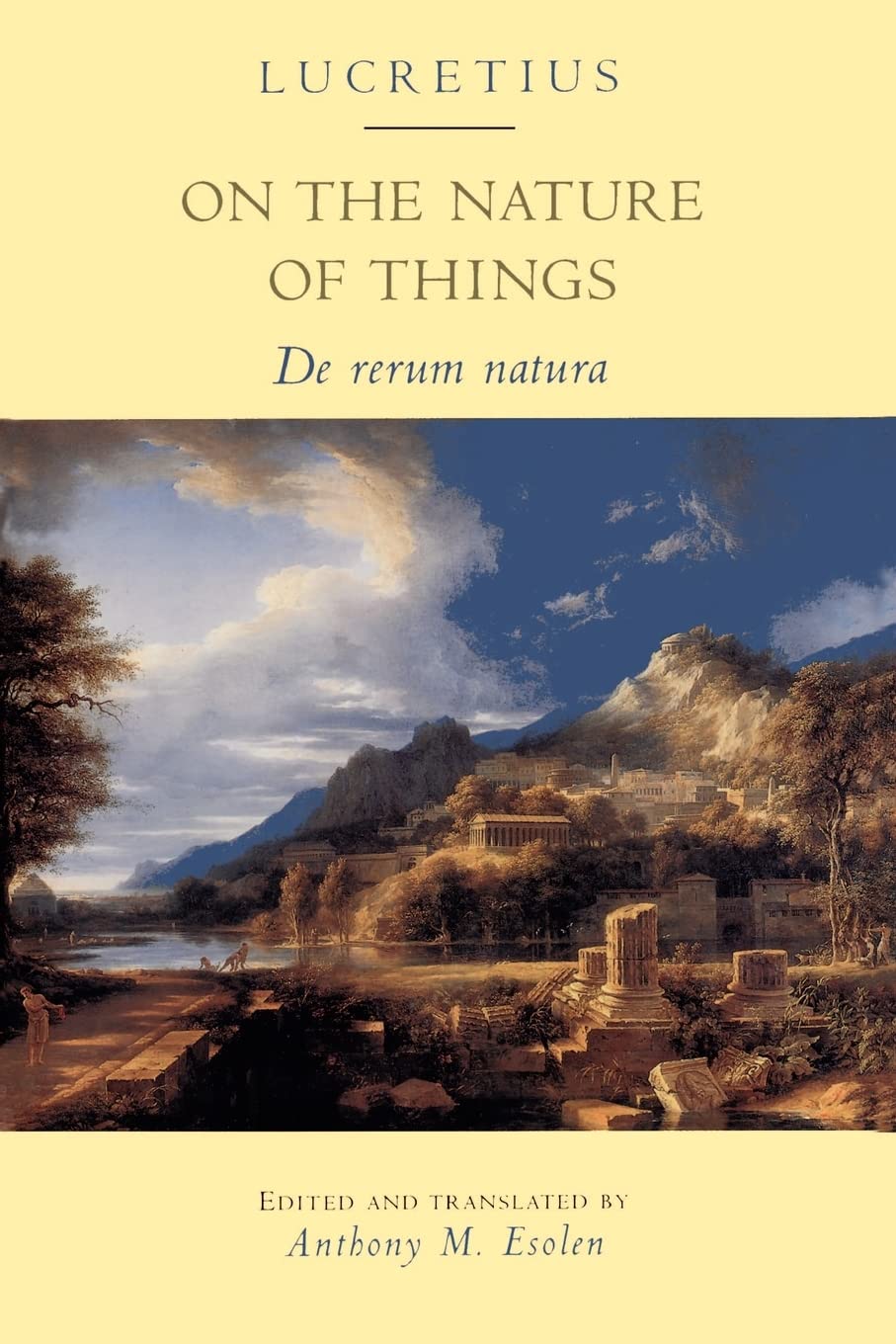
On the Nature of Things: De rerum natura
MIA KARTS BOOKS

- Vendor: Mia Karts
On the Nature of Things: De rerum natura
Book Details
- Author
- Lucretius
- Publisher
- Cengage Learning
- Format
- Paperback
- Language
- English
- Category
- Movements & Periods
- Condition
- New
- ISBN-13
- 9780801850554
- ISBN-10
- 080185055X
Free U.S. shipping on all orders. International shipping is calculated at checkout.
ISBN: 080185055X
Author: Lucretius
Condition: New
"Anthony Esolen has the rare gift of being both a fine poet and a lover of languages. His diction is poetic and natural; he has a fine ear for sound, and the translation benefits greatly from being read aloud--as Latin poetry was meant to be. Esolen's verse translation is clear and forceful. It can, and will, be read."--Kenneth J. Reckford, University of North Carolina, Chapel HillLittle is known about Titus Lucretius Carus, except that he lived in the early first century B.C. What does survive is a masterful poetic work that stands as the greatest exposition of Epicurean philosophy. Writing in the waning days of the Roman Republic--as Rome's politics grew individualistic and treacherous, its high-life wanton, its piety introspective and morbid--Lucretius sets forth a rational and materialistic view of the world which offers a retreat into a quiet community of wisdom and friendship.Until now, there has been no adequate English verse translation of De Rarum Natura. Anthony Esolen fills that gap with a version that reproduces--with remarkable faithfulness--the meaning, pace, and tone and even the poetic meter (accentual pentameter) of the original Latin.A careful observer of nature, Lucretius writes with an innocent curiosity into how things are put together--from the oceans, lands, and stars to a mound of poppy seeds, from the "applause" of a rooster's wings to the human mind and soul. Yet he is no romantic. Nature is what it is--fascinating,purposeless, beautiful, deadly. Once we understand this, we free ourselves of superstitious fears, becoming as human and as godlike as we can be. The poem, then, is about the universe and how human beings ought to live in it. Epicurean physics and morality converge.Anthony Esolen's masterful translation will introduce a new generation of readers to a thinker whose powers of observation and depth of insight remain fresh to the present day.
Have a question?
On the Nature of Things: De rerum natura
You May Also Like
More in Cultural Studies