
Optimizing the "Drug-Like" Properties of Leads in Drug Discovery (Biotechnology: Pharma...
MIA KARTS BOOKS

- Vendor: Mia Karts
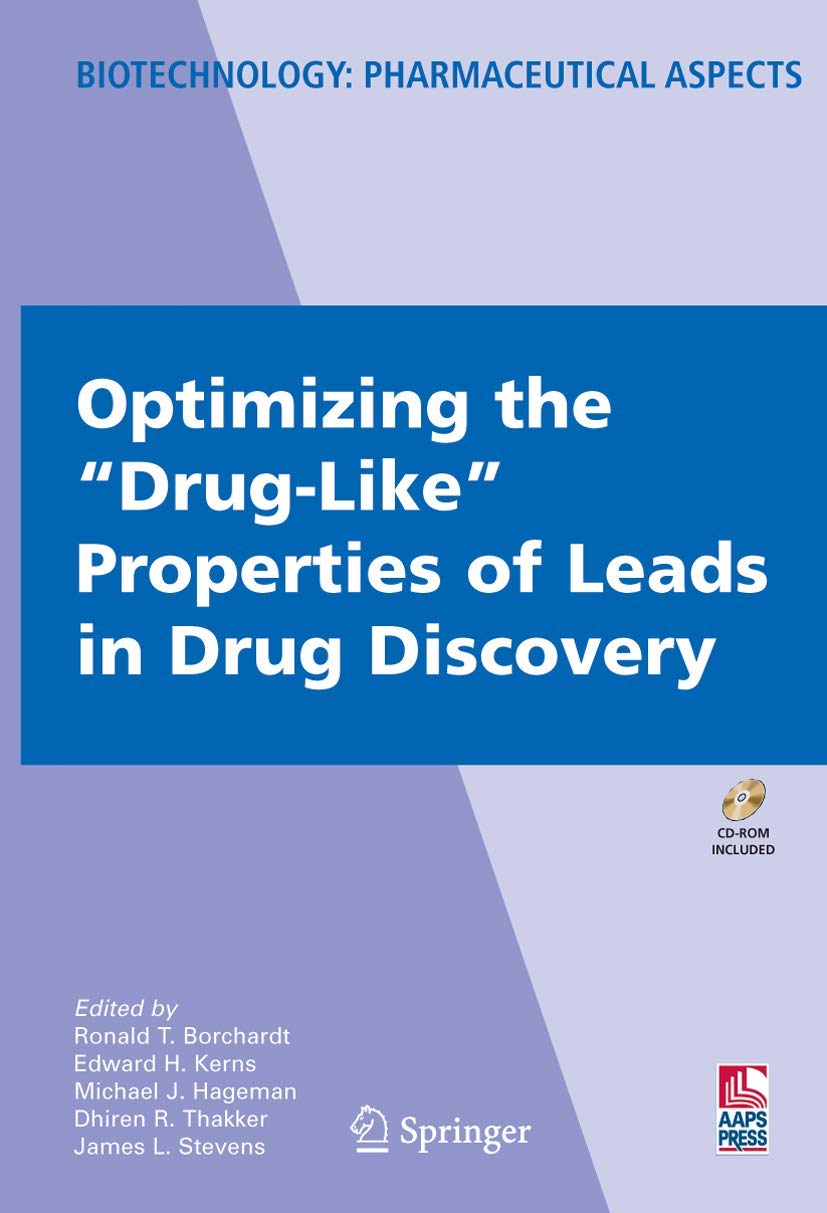
Optimizing the "Drug-Like" Properties of Leads in Drug Discovery (Biotechnology: Pharmaceutical Aspects, IV)
Book Details
- Author
- Ronald Borchardt
- Publisher
- Springer
- Format
- Hardcover
- Language
- English
- Category
- Pharmacy
- Condition
- New
- ISBN-13
- 9780387340562
- ISBN-10
- 0387340564
Free U.S. shipping on all orders. International shipping is calculated at checkout.
ISBN: 0387340564
Author: Borchardt, Ronald
Condition: New
Drug discovery and development is a very complex, costly, and ti- consuming process. Because of the uncertainties associated with predicting the pharmacological effects and the toxicity characteristics of new chemical entities in man, their clinical development is quite prone to failure. In recent years, phar- ceutical companies have come under increasing pressure to introduce new blockbuster drugs into the marketplace more rapidly. Companies have responded to these pressures by introducing new technologies and new strategies to expedite drug discovery and development. Drug discovery and development have traditionally been divided into three separate processes (i. e. , discovery research, preclinical development, and clinical development) that ideally should be integrated both organizationally and functionally. Instead, separate and distinct discovery research, preclinical development, and clinical development divisions were created within many companies during the 1980s and 1990s, Because of their isolation, scientists in the discovery research divisions often were advancing drug candidates into preclinical development that had marginal drug-like properties. For the purpose of this presentation, drug-like properties refer to the molecules physicochemical, absorption-distribution-metabolism-excretion (ADME), and toxicological properties. Lacking optimal drug-like properties often caused these drug candidates to fail in preclinical or clinical development.
Have a question?
Optimizing the "Drug-Like" Properties of Leads in Drug Discovery (Biotechnology: Pharmaceutical Aspects, IV)
