


Salome and the Dance of Writing: Portraits of Mimesis in Literature
MIA KARTS BOOKS

- Vendor: Mia Karts
Salome and the Dance of Writing: Portraits of Mimesis in Literature
Free U.S. shipping on all orders. Free international shipping on orders over $99
All orders are dispatched the next business day!
Competitive Pricing You Can Trust — Quality You Can Rely On.
ISBN: 0226519716
Author: Meltzer, Fran
Condition: New
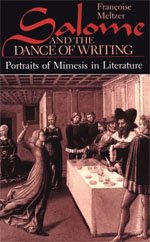
About the Author Franoise Meltzer is the Edward Carson Waller Distinguished Service Professor at the University of Chicago, where she is also professor at the Divinity School and in the College. Meltzer is the author of five books, most recently of Seeing Double: Baudelaires Modernity, and a co-editor of the journal Critical Inquiry. Product Description How does literature imagine its own powers of representation? Franoise Meltzer attempts to answer this question by looking at how the portrait-the painted portrait, framed-appears in various literary texts. Alien to the verbal system of the text yet mimetic of the gesture of writing, the textual portrait becomes a telling measure of literature's views on itself, on the politics of representation, and on the power of writing. Meltzer's readings of textual portraits-in the Gospel writers and Huysmans, Virgil and Stendhal, the Old Testament and Apuleius, Hawthorne and Poe, Kafka and Rousseau, Walter Scott and Mme de Lafayette-reveal an interplay of control and subversion: writing attempts to veil the visual and to erase the sensual in favor of "meaning," while portraiture, with its claims to bringing the natural object to "life," resists and eludes such control. Meltzer shows how this tension is indicative of a politics of repression and subversion intrinsic to the very act of representation. Throughout, she raises and illuminates fascinating issues: about the relation of flattery to caricature, the nature of the uncanny, the relation of representation to memory and history, the narcissistic character of representation, and the interdependency of representation and power. Writing, thinking, speaking, dreaming, acting-the extent to which these are all controlled by representation must, Meltzer concludes, become "consciously unconscious." In the textual portrait, she locates the moment when this essential process is both revealed and repressed. From Library Journal Meltzer's engrossing study of the critical and philosophical aporia posed by the literary presentation of visual representation utilizes Salome's deadly dance as metaphoric of representation's indescribableyet imaginablepower. Portraiture has concerned writers from Plato through Kant to Ricouer and Derrida and storytellers from Apuleius to Flaubert and Stendahl. Meltzer considers the impact of "Salome's dance" not only in classical and French literature (in which she is a specialist), but in biblical and Freudian texts as well. This challenging excursion through a theory of literary mimesis is a consummate work of scholarship that will reward specialists in literature and philosophy as well as the informed general readers. Francisca Goldsmith, Golden Gate Univ. Lib., San FranciscoCopyright 1987 Reed Business Information, Inc.
Have a question?
Salome and the Dance of Writing: Portraits of Mimesis in Literature
