

The Biology and Pathology of Innate Immunity Mechanisms (ADVANCES IN EXPERIMENTAL MEDIC...
MIA KARTS BOOKS

Book details
- Language
- English
- Category
- Microbiology
- Condition
- New
- ISBN-10
- 0306464098
- Vendor: Mia Karts
The Biology and Pathology of Innate Immunity Mechanisms (ADVANCES IN EXPERIMENTAL MEDICINE AND BIOLOGY Volume 479) (Advances in Experimental Medicine and Biology, 479)
Free U.S. shipping on all orders. International shipping is calculated at checkout.
ISBN: 0306464098
Author: Keisari, Yona
Condition: New
In recent years increased scientific attention has been given to immediate defense mechanisms based on non-clonal recognition of microbial components. These mechanisms constitute the innate immunity arm of the body s defense. Identification of pathogens by these mechanisms involves primarily receptors recognizing sugar moieties of various microorganisms. Innate immunity based mechanisms are essential for the existence of multicellular organisms. They are evolutionarily conserved and designed to provide immediate protection against microbial pathogens to eradicate infection. Activation of innate immunity is crucial for transition to specific immunity and for its orientation, and to assist the specific immune response in the recognition of pathogens and their destruction. Innate immunity is regularly involved in the arrest of bacterial, mycotic, viral and parasitic infections, giving the specific immune response time to become effective. It becomes critically essential in immunocompromised patients who fail to mount specific immune responses due to congenital or acquired immunodeficiencies as a result of chemotherapy, dialysis, immunosuppressive drugs, or HIV infection. The Innate Immunity arsenal constitutes polymorphonuclear and mononuclear phagocytes, mast cells, the complement system, Natural Killer cells, antimicrobial peptides, and presumably a subset of T lymphocytes with TCRl receptors.
Have a question?
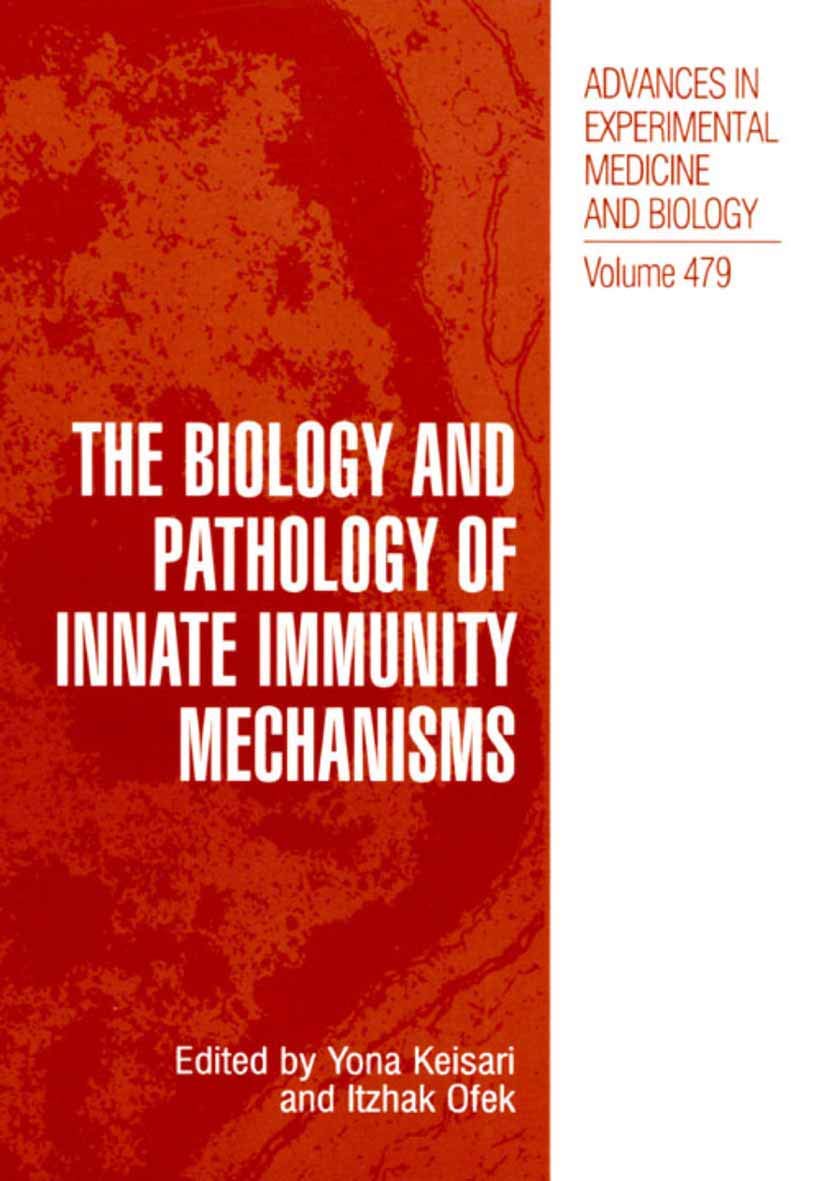
The Biology and Pathology of Innate Immunity Mechanisms (ADVANCES IN EXPERIMENTAL MEDICINE AND BIOLOGY Volume 479) (Advances in Experimental Medicine and Biology, 479)
You May Also Like
More in Biology