


The Breaking of Style: Hopkins, Heaney, Graham (The Richard Ellmann Lectures in Modern ...
MIA KARTS BOOKS

- Vendor: Mia Karts
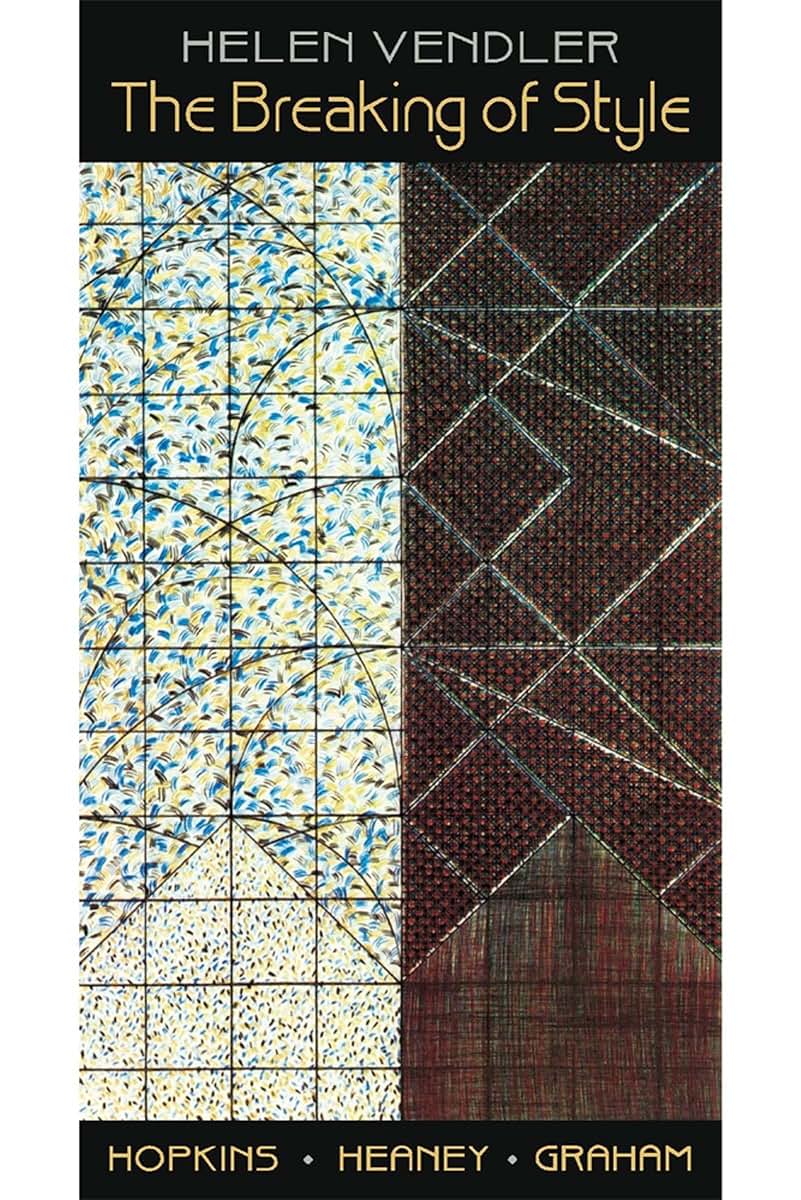
The Breaking of Style: Hopkins, Heaney, Graham (The Richard Ellmann Lectures in Modern Literature)
Book Details
- Author
- Helen Hennessy Vendler
- Publisher
- Harvard University Press
- Format
- Paperback
- Language
- English
- Category
- Criticism & Theory
- Condition
- New
- ISBN-13
- 9780674081215
- ISBN-10
- 0674081218
Free U.S. shipping on all orders. International shipping is calculated at checkout.
ISBN: 0674081218
Author: Vendler, Helen Hennessy
Condition: New
Style is the material body of lyric poetry, Helen Vendler suggests. To cast off an earlier style is to do an act of violence to the self. Why might a poet do this, adopting a sharply different form? In this exploration of three kinds of break in poetic style, Vendler clarifies the essential connection between style and substance in poetry. Opening fresh perspectives on the work of three very different poets, her masterful study of changes in style yields a new view of the interplay of moral, emotional, and intellectual forces in a poets work.Gerard Manley Hopkins invention of sprung rhythm marks a dramatic break with his early style. Rhythm, Vendler shows us, is at the heart of Hopkins aesthetic, and sprung rhythm is his symbol for danger, difference, and the shock of the beautiful. In Seamus Heaneys work, she identifies clear shifts in grammatical atmosphere from one poem to the next-from nounness to the betweenness of an adverbial style-shifts whose moral and political implications come under scrutiny here. And finally Vendler looks at Jorie Grahams departure from short lines to numbered lines to squared long lines of sentences, marking a move from deliberation to cinematic freeze-framing to coverage, each with its own meaning in this poets career.Throughout, Vendler reminds us that what distinguishes successful poetry is a mastery of language at all levels-including the rhythmic, the grammatical, and the graphic. A fine study of three poets and a superb exposition of the craft of poetry, The Breaking of Style revives our lapsed sense of what style means.
Have a question?
The Breaking of Style: Hopkins, Heaney, Graham (The Richard Ellmann Lectures in Modern Literature)
